Key points
- In force since: 1 October 2026
- Conditions to meet: 3
- Legal text: Real Decreto 518/2026
Royal Decree 518/2026 of 24 June 2026, published in Spain’s official gazette (BOE) on 26 June and in force since 1 October 2026, adds a new paragraph 4 to Article 92 of the Spanish General Traffic Regulations. A motorhome, or any other vehicle fitted out as living accommodation, must be parked without anything extending beyond its outline seen from above, resting only on its tyres (chocks and wedges allowed), and without discharging any fluids from the living area. Town halls still regulate parking in their streets by by-law (time limits, pay-and-display zones, charges based on vehicle size), but their by-laws may not contradict the national rules.
What the new rule says
Royal Decree 518/2026 of 24 June 2026 amends Spain’s General Traffic Regulations. Most of it is about the safety of motorcyclists, cyclists and pedestrians, but its preamble says that the regulations now deal “for the first time” with the parking of motorhomes and other vehicles fitted out as living accommodation. The government says it followed an approach similar to some neighbouring countries, and notes that Spain has gone from 150 dedicated motorhome areas to just over 1,000.
The new paragraph 4 of Article 92 sets three conditions. A motorhome must be parked:
- without extending anything beyond the outline of the vehicle seen from above;
- resting only on its tyres, with chocks or safety wedges allowed;
- without discharging any fluids from the living area.
Until now, the only guidance was an instruction from the DGT, Spain’s traffic authority, which local police forces did not always read the same way. The rule now sits in the regulations themselves, published in the BOE, Spain’s official gazette, on 26 June 2026, and in force since 1 October 2026: this is the first winter season under the new rule.
Parked or camping? The practical test
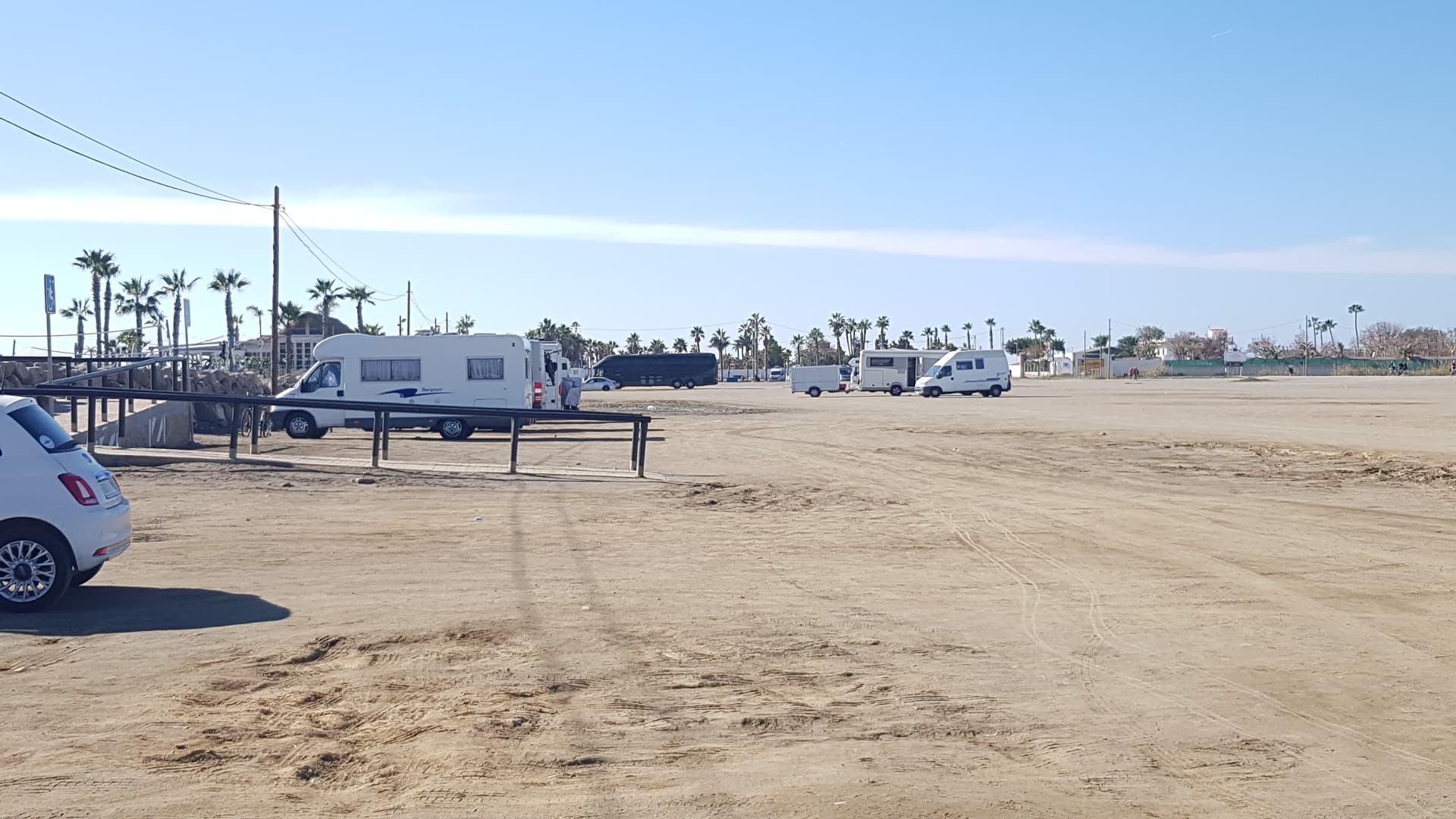
The decree never uses the word “camping”. It describes what a properly parked motorhome looks like. As long as you meet the three conditions, your motorhome is parked like a car, whether you are on board or not. As soon as you step outside them, you are no longer simply parked.
| Situation | Parked? |
|---|---|
| Door and windows shut, vehicle on its wheels | Yes |
| Levelling chocks under the wheels | Yes, the text allows them |
| Awning wound out, table or chairs outside | No: they extend beyond the vehicle |
| Electric step left out | No: it extends beyond the vehicle too |
| Levelling jacks or corner steadies down | No: the vehicle no longer rests on its tyres |
| Grey water dripping under the vehicle | No: discharge of fluids |
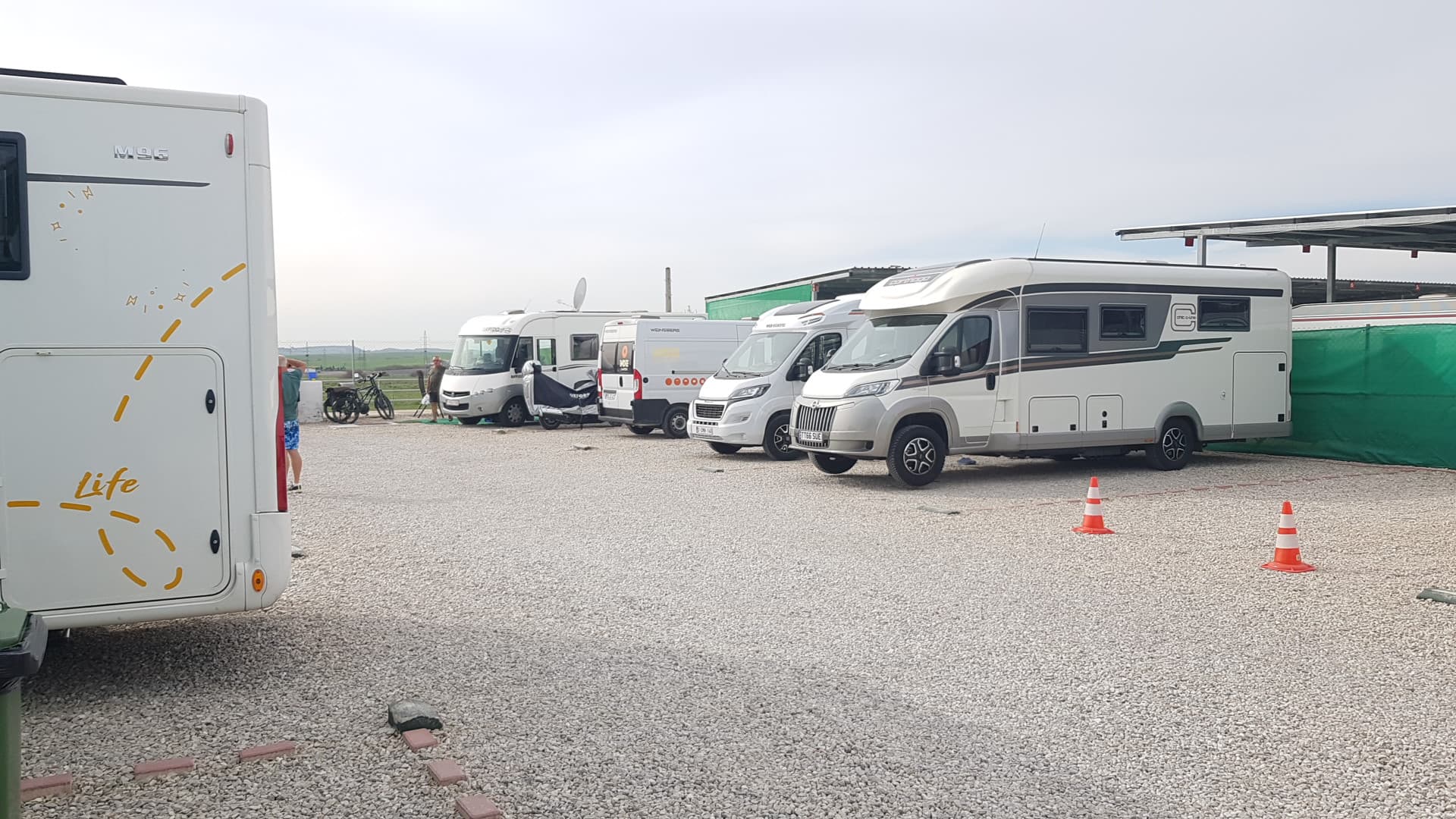
To empty grey water and the toilet cassette, use a service point at an aire or a campsite. Our directory of campsites in Spain shows which sites have a motorhome service point, and which ones take larger vehicles: handy if you are looking for a long winter stay.
What town halls can still do
The decree deletes the old Article 93 and adds a new section on parking in towns. Town halls (ayuntamientos) keep control through their by-laws. They can:
- set time limits, for example a few hours on the seafront;
- have a vehicle removed if it has no ticket in a pay-and-display zone, or has stayed more than three times the time paid for;
- set charges based on the size and environmental class of the vehicle, so a motorhome may pay more than a car.
There is a new limit on them, though: by-laws may not contradict, alter or distort the national regulations. Closing a car park to motorhomes alone, when they meet the three conditions, becomes harder to justify. Rules specific to beaches, the coastline and protected natural areas still apply.
Wintering in Spain: our tips
- On the street, behave like a car: nothing outside, awning in, chocks yes, jacks no.
- For outdoor living (awning, table, barbecue), choose a campsite or an aire that allows it. Many snowbirds book a long stay on a campsite for the winter months and use street parking only for day trips.
- Empty only at proper service points. Grey water on the street is still the quickest way to get a car park closed to motorhomes.
- Check the signs as you arrive in a town: many coastal towns have their own winter rules.
We will update this article as soon as the DGT or town halls publish new guidance.
Our free tools on this topic
Frequently asked questions
Can I sleep in my motorhome on a street in Spain?
The decree does not mention sleeping at all: it sets out how the vehicle must be parked. A motorhome resting on its wheels, with nothing sticking out and nothing draining from it, is parked like any other vehicle, whether or not someone is inside. You must still obey the signs and the local by-law, which may limit how long you can stay or close certain areas.
Can I put the awning out or set up chairs next to the van?
No. Anything that extends beyond the outline of the vehicle seen from above rules you out: awning, a step left out, chairs, a table, a washing line. At that point you are no longer simply parked. Save the outdoor living for a campsite or an aire that allows it.
Are levelling ramps and chocks allowed?
Yes. The text says the vehicle must rest “only on its tyres, with the option of chocks or safety wedges”. Levelling jacks and stabiliser legs are not mentioned, so it is wiser not to lower them on the street.
Can a Spanish town still ban motorhomes?
A town hall can still regulate parking in its streets by by-law: time limits, pay-and-display zones, higher charges for larger vehicles. But the decree states that by-laws may not contradict or distort the national rules. Banning motorhomes simply for being motorhomes, when they meet the three conditions, therefore becomes harder to defend. Specific rules for beaches, the coastline and protected natural areas still apply.
Sources (2)
Article updated on .